
Grace with Glame
Choosing an Abaya That Actually Suits You
Fabric weight, cut and sleeve style matter more than colour. How to pick an abaya you will reach for every day.
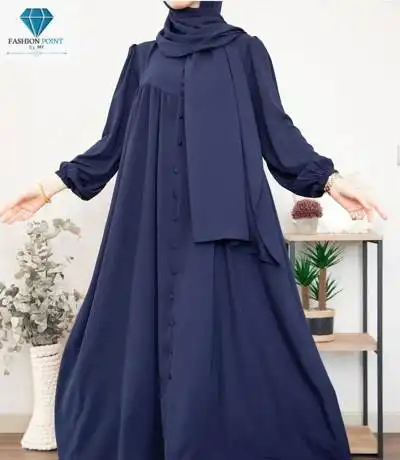
An abaya is a daily garment, so comfort decides whether you wear it or leave it hanging. Three things determine that: the fabric, the cut and the sleeves.
Fabric weight
Nida and medina silk are the two most common choices. Nida is matte, slightly heavier and holds its shape — good for structured, formal styles. Medina silk is lighter with a soft sheen and moves more, which is comfortable in heat but shows creases. For Pakistani summers, lighter and looser almost always wins over structured and fitted.
The cut
A closed front is simple and formal. An open front, worn over your own clothes, is easier to put on and take off and works better for short trips. A flared or umbrella cut gives room to move and hides the outline of clothes underneath; a straight cut looks sleeker but restricts stride length — check that you can climb stairs comfortably before buying.
Sleeves
Wide bell sleeves look elegant but get in the way when eating and cooking. Fitted or cuffed sleeves are more practical for daily wear. Many people keep one of each for that reason.
Length and fit
The hem should clear the floor by two to three centimetres — long enough to look intentional, short enough not to sweep the ground or catch under shoes. Measure from your shoulder to your ankle rather than trusting a size label, since sizing varies widely between makers.
Stoles and accessories
An abaya sold with a matching stole saves the work of finding one that matches the exact shade of black or grey — dyes vary more than photographs suggest.
Caring for it
Wash cold, inside out, and hang immediately to avoid creasing. Nida and medina both iron at low heat only; too hot and the fabric shines permanently in patches. Store on a wide hanger so the shoulders keep their shape.